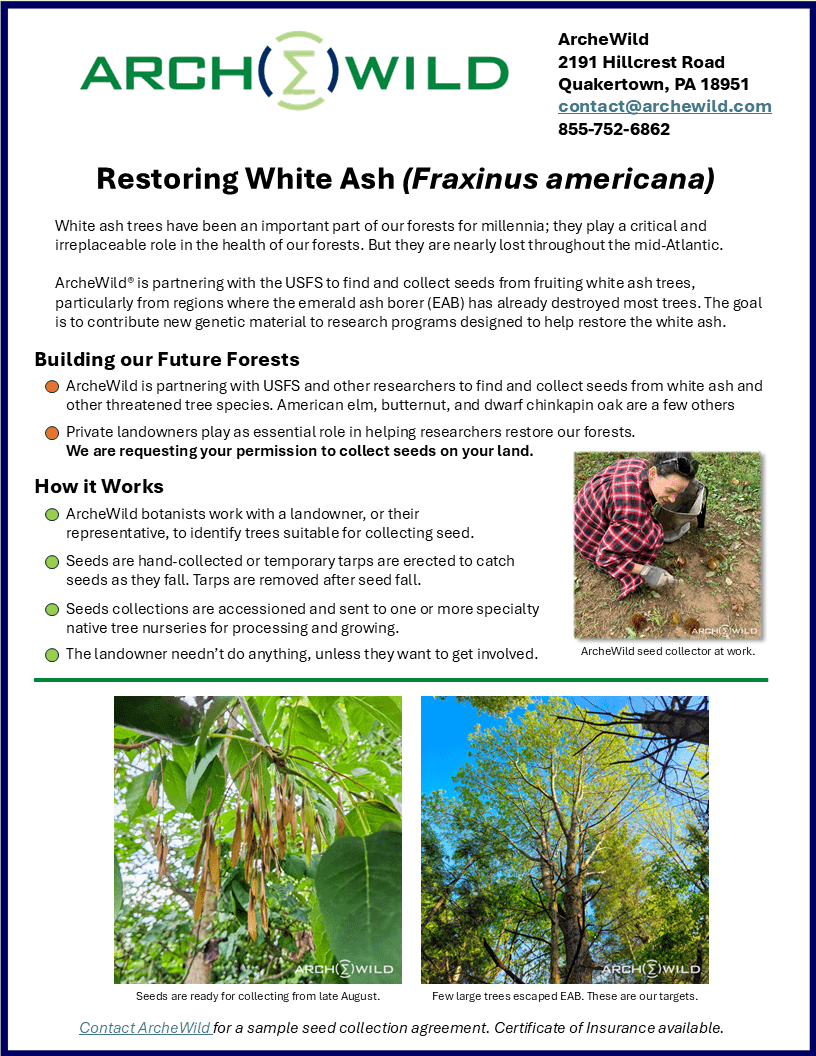
Connect with our grower network if you are already a community of seed collectors & harvesters.

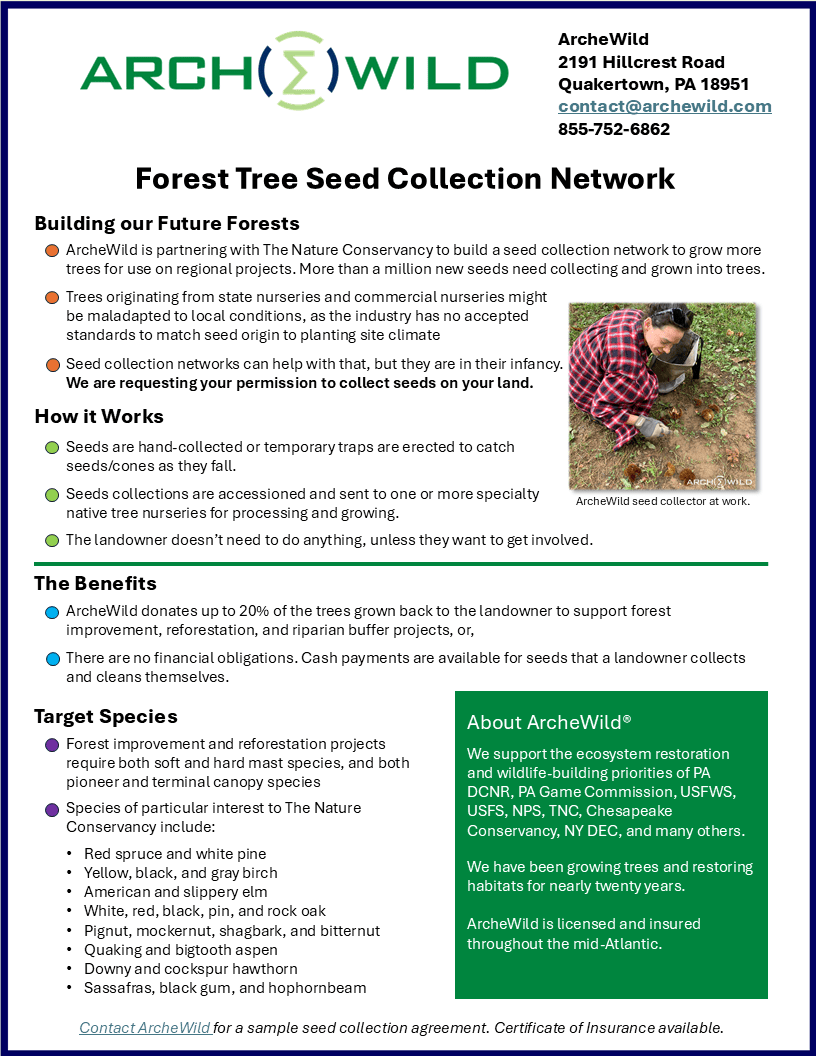
Collect seeds from your own land. Learn what to collect, when, and how.

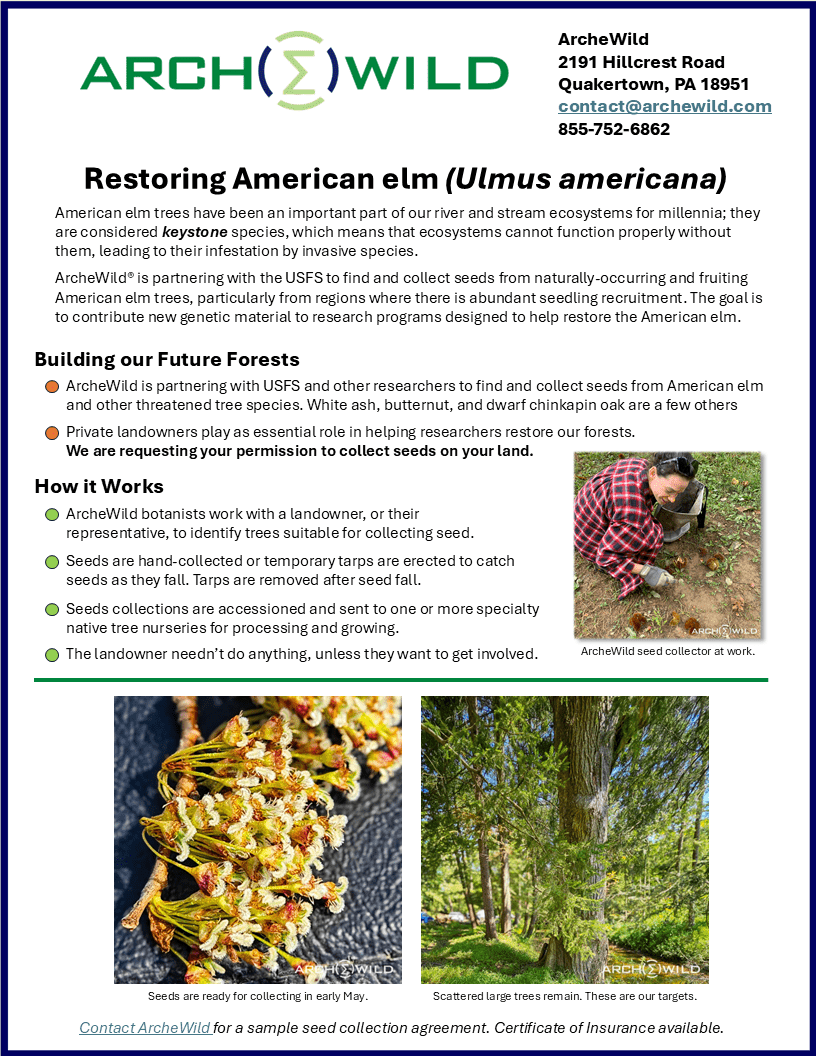
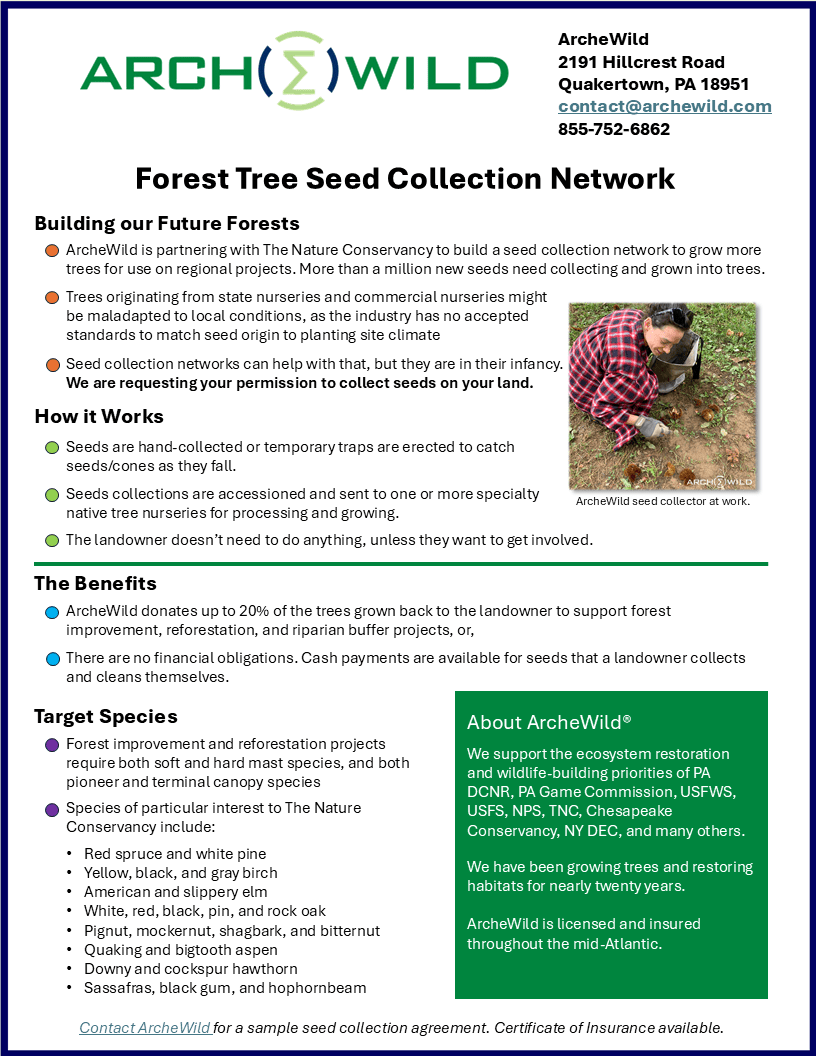
We need more tree growers of all sizes. NGOs, small nurseries, and backyard growers are welcome.


Successful reforestation takes more than simply buying low-cost bareroot trees and getting them into the ground. Did you know that 88% of reforestation and riparian forest buffer projects fail to meet expectations?
Our inhouse R&D team has been implementing and studying reforestation projects for nearly twenty years and have identified several make-it-or-break-it activities and decisions.
The most important turns out to be having your reforestation project evaluated by a practicing ecologist to identify the mosaic of soil-water-light combinations present on your land. Without this fundamental understanding of how your land functions, and how is likely to function in the future, you could just be winging the entire project.
Second, choosing the correct reforestation species is of paramount importance. It’s not about planting what you or your forester says you should plant. It’s about what your land can ecologically support, in its current condition and in the future.
Plant form is another major consideration. Do you use $0.50 bareroot trees delivered in a box or do you use containerized plants, or do you need a specialized product like ArcheWild’s containerless line?
An experienced planter not only plants well, but they know how to find the most suitable planting site for each tree. Through rigorous training and practice, they find the best micro-topography and best planting conditions for each tree or shrub. We have found that experience alone can improve reforestation outcomes by up to 25%
This reforestation project was designed to improve the quality of the forest on the miliatary base, which had degraded due to weather pattern changes, insect damage, and human activities.
ArcheWild planted more than 50,000 trees grown from mostly PA-sourced seeds. Timelines were very compressed, so ArcheWild deployed a large team, pulling from other departments to get the job done before summer.
We replaced the dying ash and silver maple forests with a more site-appropriate mix of white pine, oaks, and hickories, among others.
Red spruce terminal forests were harvested almost out of existence in the 19th century, and they cannot recover without our help.
Agencies in West Virginia, Maryland, and Pennsylvania have been working hard for decades to rebuild these forest habitats for hares and warblers, and ArcheWild has been supporting them along the way with plants and planting teams.
A new 200-acre red spruce restoration project is starting up in 2025 in Pennsylvania and ArcheWild ecologists are leading the planting plan and the planting teams.
Call ArcheWild for all of your red spruce restoration needs.
Upland reforestation is challenging. Pine barrens, cedar glades, and dry exposed ridges require special techniques. The dry and sroughty nature of these soils prohibit the use of typical bareroot, so ArcheWild developed an innovative product that bridges the gap between bareroot and 3g containers; one that we call “containerless trees.” Look for the upcoming report on their efficacy.
Temporary deer fencing protects the plants seedlings, naturally-occuring regeneration, and recovering forbs with an installation cost the same as tubes/stakes, but without the maintenance expense.
Some farm fields, particularly those rented out for several decades, have reached the end of their useful life, even for hay. What to do next? Build a forest! But wait, it’s not that easy.
If a farm field cannot grow hay, how would forest seedlings fair?
Building a new forest where there hasn’t been one for hundreds of years requires improving the soil by greatly increasing its water holding capacity and its carbon and nitrogen content using nurse trees.
Building soils is not agroforestry, it is an essential first step in afforestation without which a new forest planting can fail.
Hurricanes, straight wind, tornados, insects, and climate change are damaging forests throughout the mid-Atlantic. In many areas, disturbed forests cannot repair themselves, they become invasive infestations and subject to erosion.
Protecting water quality and wildlife habitat mandates that we repair damaged forests quickly.
The ArcheWild forestry team is ready to act on a moment’s notice and tackle the clearing, pre-emptive invasive control, replanting, and reseeding that are essential post-storm and post-damage activities.
Reforestation products are specialty forms typically grown by restoration companies and can be grown under contract. They are not normally sold as landscaping products.
“Containerless,” restoration gallons, root pruned, and tubelings each have their own unique cost/performance characteristics are are chosen based on the needs of each project.
Call ArcheWild to explore your options and have the best product form custom grown for your next reforestation project.